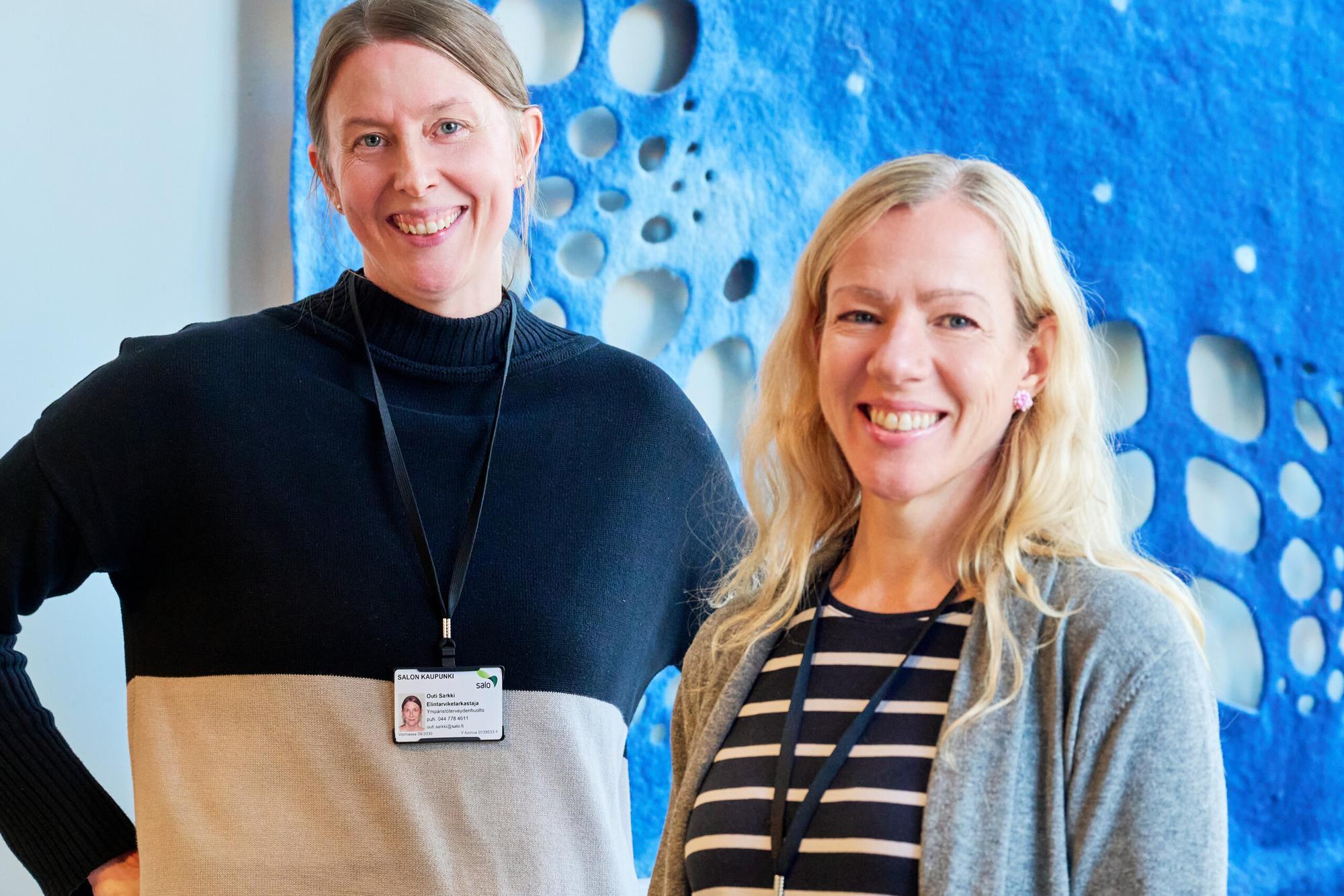
Before you can start selling food, you must notify the food control authority, plan your own-check and find out which permits your business needs. Outi Sarkki and Nina Rostiala, food inspectors at the City of Salo, explain where a new entrepreneur should start and why they should not hesitate to ask an inspector for help.
Before you start selling food, check the following:
- Suitable premises: check the permitted use of the premises with the municipal building control authority.
- Notification of food business operations: via the Ilppa service or using a form.
- Own-check plan: plan your own-check comprehensively.
- Hygiene passport and, if required, a salmonella certificate: for those handling easily perishable foods.
- Allergens and food information: make sure that product information is displayed as required by law.
- Other permits from different authorities: for example, for serving alcohol, selling tobacco products, outdoor terraces and fire safety.
- Advice: don’t hesitate to ask a food inspector from the planning stage onwards.
Sources: the Finnish Food Authority’s Setting Up a Restaurant guide and Salo Environmental Health Care
Food inspectors support entrepreneurs
The job of food inspectors is to make sure that food is prepared and served safely. Besides carrying out inspections, they spend a lot of their time advising businesses.
“Guidance and advice are exactly what we offer. We are here to help entrepreneurs, not just to inspect and find fault,” says food inspector Nina Rostiala.
Food control is part of municipal environmental health care, which also includes health protection, the supervision of tobacco sales and smoking bans, and veterinary services.
“Generally speaking, we make sure that our living environment is safe,” sums up food inspector Outi Sarkki.
Language does not have to be a barrier
Food inspectors also help entrepreneurs with whom they do not share a common language. They communicate as well as they can in the languages they know and use translation software when needed.
“Thanks to AI, translation tools have become so good that they make our work easier, especially during inspections. One way or another, we can carry out an inspection in any language,” Sarkki says. Machine translation also makes it possible to give advice via email in any language.
EU food legislation, on which most of the requirements are based, is available in all EU languages in the EUR-Lex service. Finland’s own national legislation, including the exemptions it allows for some businesses, is only available in Finnish and Swedish. The Finnish Food Authority publishes easy-to-understand guidance for many different situations, and some of it is also available in English, such as the Setting Up a Restaurant guide.
How to notify the authorities about your food business
Many new entrepreneurs think that a Business ID is all they need, but a food business must also submit a separate notification before it starts operating. “From a legal point of view, it’s quite simple – you only need to submit one notification when you start a food business,” Rostiala says.
The notification is submitted via Ilppa, the electronic notification service for environmental health care, which you log in to with Suomi.fi e-identification, for example using your online banking credentials. Ilppa is available in Finnish and Swedish, but not in English. However, you can translate any web page into your own language, for example using your web browser’s translation feature, and the authorities can also help you use the service if needed. If you do not yet have Finnish online banking credentials, you can make the notification using the form on the Salo Environmental Health Care website (in Finnish) and send it by email.
According to the Finnish Food Authority’s guidance, the notification must be made at least four weeks before you open. You do not need to wait for a reply or for the first inspection – you can start operating four weeks after submitting the notification. The same service is also used to report significant changes and the closure of the business.
As a rule, all food business operations are registered. Exceptions mainly concern low-risk activities, which are explained in the Finnish Food Authority’s guidance. For example, a private individual can serve coffee or organise an occasional pop-up food event without registering. When a company has a Business ID and runs a regular business involving food, its operations must always be registered.
Online food sales are also inspected, and inspectors check things such as package labelling and documents. “New entrepreneurs may think that we only inspect the premises. However, we look at the business’s entire operations,” Rostiala points out.
Food legislation also applies to materials that come into contact with food, so, for example, importing and distributing pizza boxes is also an activity that must be registered.
Food inspectors give advice on matters related to food legislation, but setting up a business may also involve permits from other authorities. For example, serving alcohol and selling tobacco products each require a separate licence.
The premises must be suitable for handling food
Anyone setting up a restaurant or café should read the section on premises in the Finnish Food Authority’s Setting Up a Restaurant guide, which describes the requirements for restaurant premises.
You can also prepare food for sale at home, but this usually needs to be registered as a food business too.
“The same regulations apply to food wherever it is prepared or served,” Sarkki says.
In a home kitchen, however, particular care must be taken to keep the business’s food separate from the family’s food. Separate storage space is set aside for the business’s food, and food for sale is not prepared while the family’s meals are being cooked or eaten. Pets must not have access to areas where food is stored or handled, and infectious diseases among family members must also be taken into account.
A home-based food business also has to stay fairly small, as few homes have the facilities for large-scale production. According to the Finnish Food Authority, a home cannot be used as an approved food establishment. These are premises that produce animal-based foods, such as meat or dairy products, for wide distribution, for example to other shops through wholesalers.
A food truck, sales van, tent or market stall is classed as mobile food premises. As with other food premises, a registration notification must be submitted for it to the food control authority of the operator’s home municipality at least four weeks before operations begin. When mobile food premises visit other municipalities, the local food control authority must be informed at least four working days in advance.
Get your team’s hygiene passports in order
A hygiene passport is required when unpackaged, easily perishable food is handled on food premises. You may work without a hygiene passport for up to three months, after which you must pass the test. Tests are organised throughout Finland by hygiene passport examiners approved by the Finnish Food Authority.
The test can also be taken in languages other than Finnish. The Finnish Food Authority maintains a list of examiners who organise tests in dozens of different languages. Some examiners also offer tests in which a dictionary may be used, as well as special arrangements for people with dyslexia.
In the inspectors’ experience, businesses usually have their hygiene passports in order, and problems are rare.
“The test isn’t very difficult after all, and there’s no need to be afraid of it,” Rostiala says encouragingly.
Much of food control is about own-check
Own-check is mandatory for every food business. This means that entrepreneurs plan for themselves how they will manage the risks in their business and how they will correct any mistakes.
“Our inspections focus largely on whether a business’s own-check is good enough,” Sarkki says.
Own-check must also be documented. For example, businesses must record the temperatures of their food and storage facilities, and keep these records so that the inspector can check them. Records can be kept on a computer or on paper. They also benefit the business itself: if food poisoning is suspected, for example, the records can show that temperatures have been properly controlled.
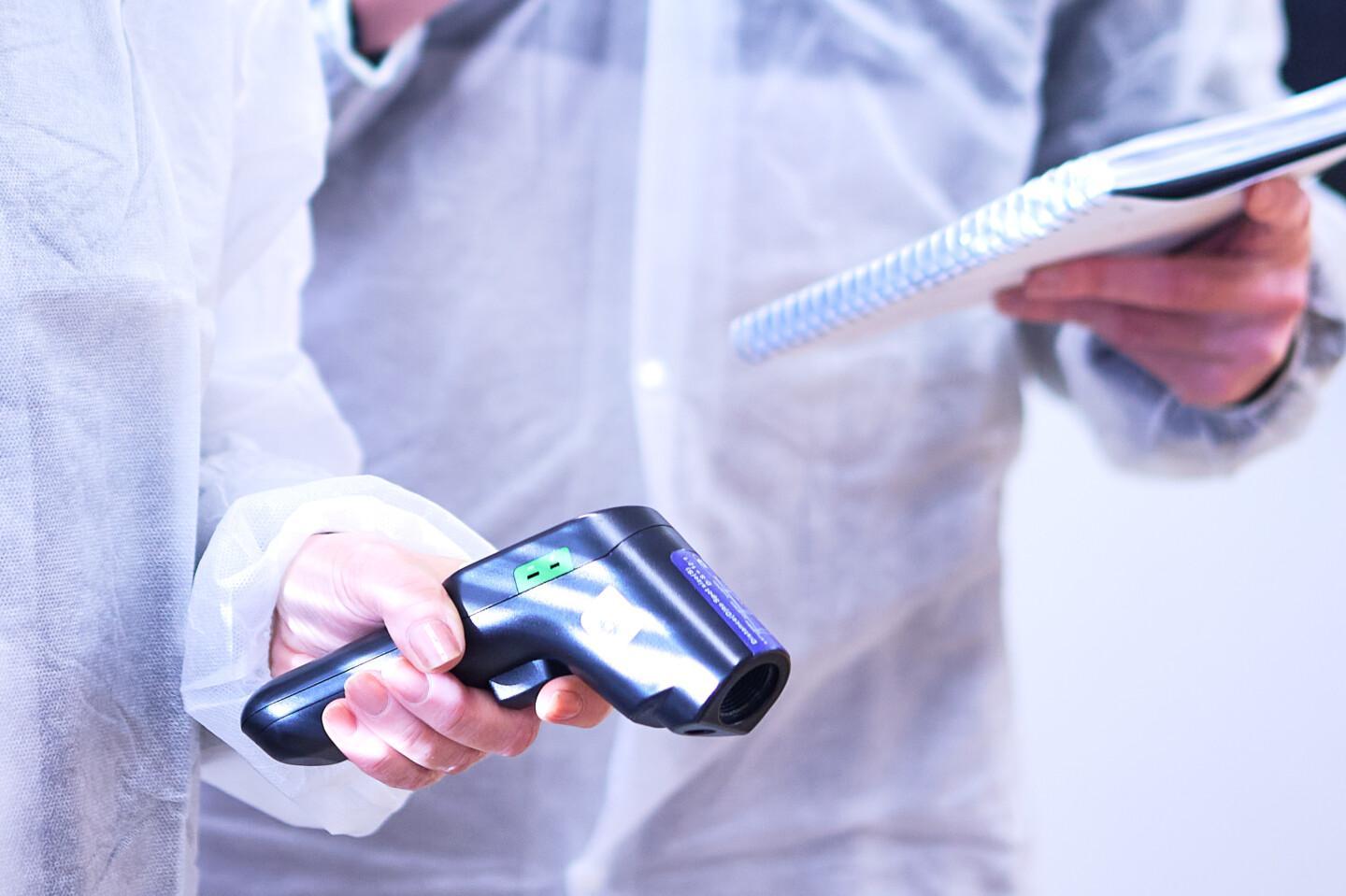
A thermometer is an important own-check tool, but inspections sometimes reveal that there is no thermometer available at the premises at all. An entrepreneur may rely on the refrigerator or freezer staying at the temperature it has been set to. As part of own-check, however, temperatures must be checked by measuring them, including the temperature of the food itself, so that customers are served safe food.
How to prepare for an inspector’s visit
All food inspectors in Finland use the same Oiva evaluation guidelines. The guidelines are intended for inspectors, but entrepreneurs can also use them to check that their own business meets the requirements. Anyone can read them online in Finnish, Swedish and English at oivahymy.fi. The evaluation guidelines cover topics such as the maintenance and cleaning of premises, temperatures, allergen management and hygienic working practices. Not every item applies to every business: inspecting a small café is different from inspecting a factory.
An inspection usually takes 2–3 hours (including the inspector’s paperwork), and for new entrepreneurs, the main focus is on guidance.
“An inspection is largely a conversation, and we try to give new entrepreneurs plenty of advice, especially when they are just starting out. It’s worth asking us about anything you’re unsure of. We would rather give advice in advance than have an entrepreneur believe they are doing things right when they are actually acting against the law,” Rostiala says.
An Oiva report is drawn up on the inspection, and its smiley faces also tell customers how food safety has been taken into account at the business.
Some entrepreneurs are surprised when the inspector asks to see various documents, for example purchase and delivery documents. This is usually about traceability: the inspector needs to know where the food comes from. The documents show the product details and the supply chain.
According to Rostiala and Sarkki, premises are usually well suited to their purpose, because a similar restaurant or shop has often operated in the same location before. Tidiness and cleanliness are also usually in good shape. Shortcomings are found more often in package labelling and in the way food information is provided to customers, for example allergen information or country-of-origin labelling.
What to know before importing food
Many entrepreneurs with roots in another country want to sell products from their country of origin. Importing animal-based foods, such as meat or dairy products, comes with special requirements.
Finland has a national salmonella control programme that other EU countries may not be familiar with. This is why some animal-based products need a certificate showing that each batch has been tested for salmonella. Some foods cannot be imported into Finland from outside the EU at all, and even for permitted products, all the required documents must be in order.
If documents are missing, the inspector must ban the sale of those batches. In the worst case, products that have already been sold have to be recalled. Importing and selling food supplements, for example, also involves more checks than usual, so don’t hesitate to contact the food control authority before placing your first order.
What will food control cost you?
Businesses pay fees for food control. According to Salo Environmental Health Care’s price list, processing a notification costs €150. Scheduled inspections are charged by the hour, and as an inspection usually takes 2–3 hours, one visit costs around €150–250. In addition, registered food businesses pay an annual basic control fee of €150, which is set out in the Food Act.
If an inspection finds problems that need to be fixed, the business also pays for the follow-up inspection.
How often a business is inspected depends on the risks involved in its operations. Risk refers to how likely it is that the operations could pose a danger to customers’ health and how serious that danger could be. For example, preparing easily perishable food is riskier than selling pre-packaged, non-perishable products. The size of the business also matters: the more portions are prepared, the more people could fall ill if something goes wrong. This is why a kiosk selling packaged sweets is inspected less often than a restaurant that prepares hundreds of hot meals every day.
Three tips from the inspectors – find out, plan, ask
The inspectors’ first tip is to do your own research: start by reading the Finnish Food Authority’s guidance and find out what the law requires for your type of business. Second, plan your own-check carefully so that it covers everything your business does. Third, make use of the inspectors’ services and don’t be afraid to ask for help, even before you start.
“We’re here for entrepreneurs,” Rostiala reminds us.
It is easy to contact the food inspectors at Salo Environmental Health Care for advice. Most advice is given by email at ymparistoterveydenhuolto [@] salo.fi, which also makes it easier to communicate in languages other than Finnish. If needed, you can also meet an inspector in person. More information on setting up a food business is available on the websites of the Finnish Food Authority and the City of Salo (in Finnish).
Article is produced as part of the EU-cofunded KotoSalo and KotoSomero project.

Coaching for entrepreneurs in English :
Ani Grigoryan
yrittäjyysvalmentaja | entrepreneurship coach